



Major European banks such as Deutsche Bank, Santander, and Societe Generale are stepping into the digital finance space by launching euro-backed stablecoins. These tokens, backed one-to-one by the euro and issued within the EU’s regulated banking environment, signal a major shift in how banks approach blockchain-based payments and settlements.
These stable-coins are distinct from dominant U.S.-backed alternatives like USDT and USDC because their reserves are held under EU jurisdiction. This offers improved trust, transparency, and compliance—particularly significant with the introduction of the Markets in Crypto-Assets regulation (MiCA). MiCA enhances consumer protection by ensuring clarity in reserve management and governance standards.
The European Banks-issued euro stable-coins will initially focus on handling real-time B2B transactions and institutional finance use cases. Their fiat peg gives them greater price stability compared to traditional cryptocurrencies, making them attractive for use in capital markets and liquidity management.
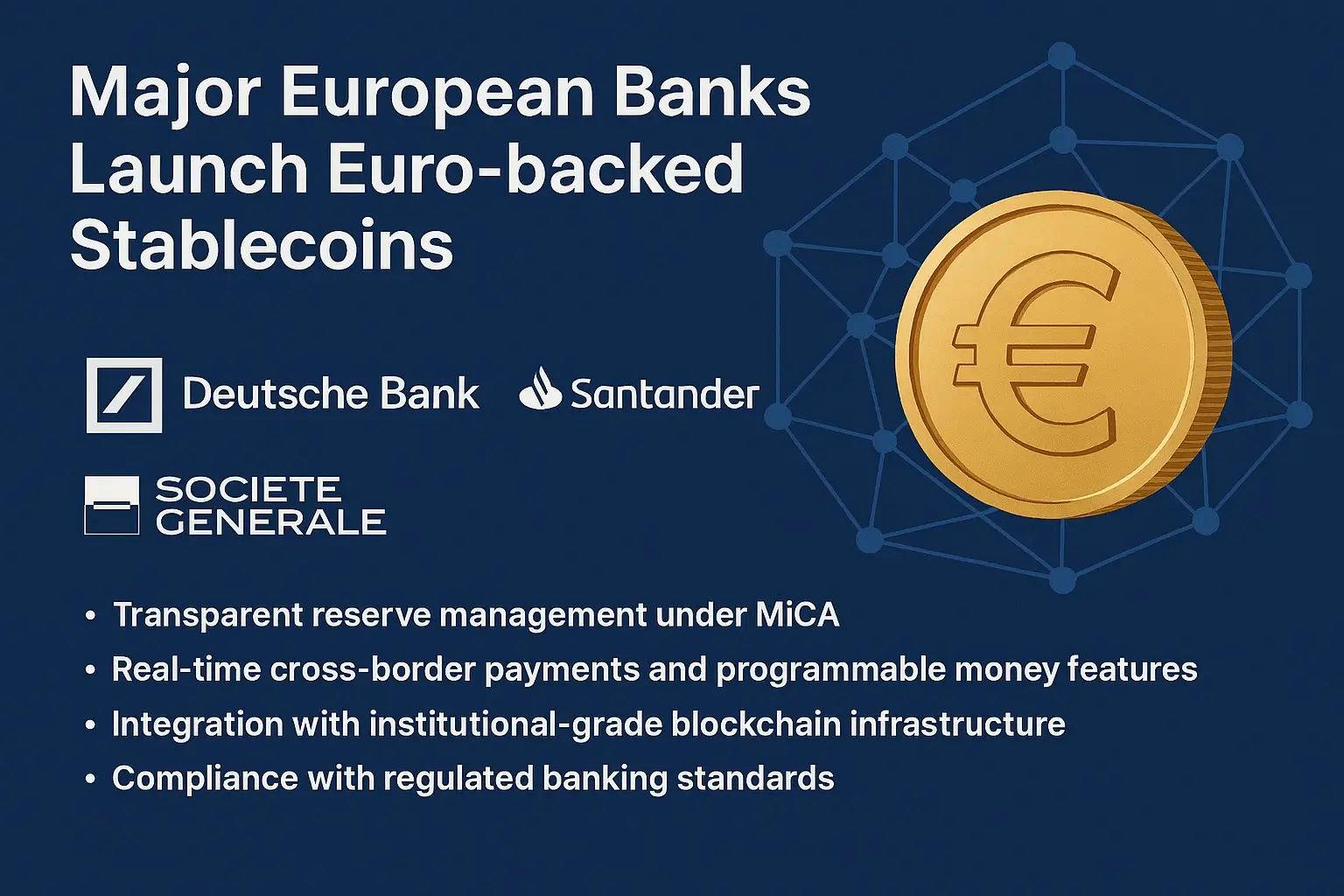

Key benefits include:
- Transparent reserve management under MiCA
- Real-time cross-border payments and programmable money features
- Integration with institutional-grade blockchain infrastructure
- Compliance with regulated banking standards
The rollout begins with selected institutional partners using permissioned blockchains, helping reduce risk and ensuring back-end system compatibility. As adoption grows, broader public access may follow, potentially reshaping European digital payments and finance.
This strategic move may also have repercussions across the Atlantic. While U.S. banks have remained reserved when compared with the due diligence of the European Banks, due to regulatory ambiguity, Europe’s progress could spur American institutions to adapt more rapidly. With banks looking to offer services such as custody, lending, and token issuance, this plan heralds new revenue opportunities and repositioning within financial services.
Even retail investors may eventually benefit. As euro stable-coins gain mainstream banking support, features once limited to crypto enthusiasts—such as tokenized savings, secure digital wallets, and fast remittances—could become staples in everyday finance.
In the long term, the true success will hinge on adoption across trade finance, lending, and settlement. But the ambition is clear: this isn’t just digitization—it’s a reimagining of how value is stored and moved under regulated oversight. This eurozone initiative could emerge as one of the most transformative financial pivots since the introduction of the euro itself.
For more details, read the full article on CNBC.