
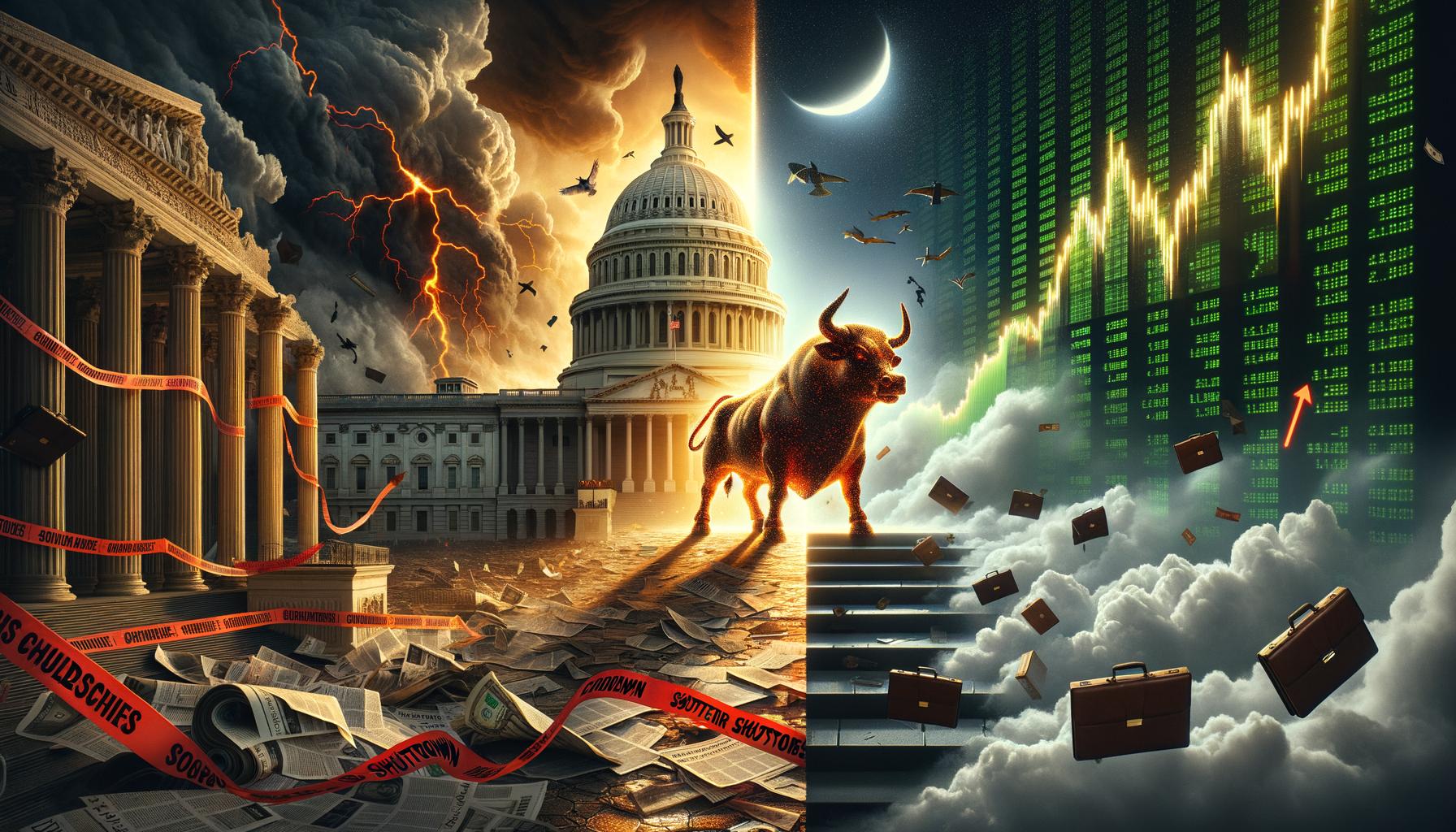
Stock markets often react with short-term jitters when Congress fails to reach a budget agreement. Still, historical data shows these shutdowns don’t always leave lasting marks on market performance. I’ve studied past instances like those in 1995-96, 2013, and 2018-19, and the trends are consistent — markets may dip or grow volatile for a few days, but they typically regain stability shortly after the political standoff ends.
What Usually Happens When the Government Shuts Down
Indices like the S&P 500 and the Dow Jones sometimes drop slightly at the beginning of a shutdown. Traders usually respond to uncertainty fast — but not always dramatically. What drives the market more than the political noise is what’s happening in the bigger picture: the economic backdrop, Federal Reserve policy, and corporate earnings.
Take the 2018-19 shutdown as an example. It lasted 35 days, making it the longest in U.S. history. Yet, the S&P 500 gained more than 10% during that same timeframe. That rally wasn’t just blind optimism. It was part of a broader recovery following a correction in late 2018. So despite the headlines, actual trading behavior reflected confidence in fundamentals.
During the 2013 shutdown, the market dipped slightly at first, but those losses reversed within the same period. Investors who stayed in the market or strategically added to positions likely saw decent returns once the budget issues resolved. It’s a reminder — sometimes the best move is simply not to overreact.
Key Takeaways from Past Shutdowns
- Short-Term Volatility: Expect increased swings, especially in industries tied to federal spending.
- Limited Long-Term Impact: Historical data shows markets often recover, or even rise, during longer shutdowns.
- Broader Forces Matter More: Macroeconomic conditions and the Fed’s stance carry more influence than politics alone.
Sectors That Could Feel the Pressure Hardest
Not every sector moves the same during a shutdown. Aerospace, defense, and government services stand out as areas where traders often get cautious. These industries rely more heavily on government contracts and spending, making them vulnerable to disruptions in appropriations.
If federal funding stalls, projects in progress might get paused or delayed, and companies with exposure to those contracts may face earnings pressure. That said, large-cap defense firms with long-term contracts tend to weather the noise better than smaller vendors or service suppliers.
Consumer-focused sectors are also worth watching. Federal paychecks cover a large workforce — if those are delayed, consumer spending might slow, especially in areas with heavy federal employment. Retailers, travel, and service industries in cities with dense federal employee populations could feel minor trickle effects if a shutdown drags out.
Still, none of these dynamics compare to the influence of interest rate expectations, inflation data, or employment figures, all of which shape market direction more decisively.
How to React as an Investor
Panic isn’t a strategy, and neither is standing still without purpose. When shutdown risks rise, I focus on high-quality companies with strong balance sheets, consistent earnings, and solid demand across various market cycles. These firms tend to outlast short political storms.
If volatility increases but the longer-term picture stays intact, that can create buying opportunities. Look at price action during the 2013 or 2018 events — early dips gave way to recoveries. For seasoned investors, careful entries during weakness paid off. For newer participants, the lesson is clear: don’t let short-term fear dictate long-term judgment.
Here are some practical tactics:
- Avoid overly reactive trades. Scaling into positions gradually beats chasing moves.
- Watch key economic indicators. Inflation, jobs, and corporate profits carry more weight.
- Assess sector footprint. If your holdings lean heavily on federal dollars, manage position size and timing more carefully.
- Stay informed but not consumed. Political developments will flood the headlines. Stay focused on market-relevant outcomes, not narratives.
Where to Keep Your Focus Going Forward
As the possibility of another shutdown looms, the real drivers of equity valuations haven’t changed. Earnings seasons are rolling in. Inflation data continues to steer Fed commentary and rate moves. Labor markets may show signs of softening or strengthening — both outcomes with their own market implications.
I suggest keeping a close eye on:
- Consumer confidence reports, especially if paycheck delays hit spending
- Treasury yields and bond market behavior, which often signal deep investor sentiment
- Fed updates, speeches, or minutes — any hint of policy shifts matters more than congressional wrangling
If you’re managing a portfolio — whether for income, growth, or preservation — use shutdown situations as a stress test. Ask: Am I invested in businesses that can pivot across cycles? Have I left room to maneuver if opportunity presents itself?
Final Thoughts
While shutdowns can shake sentiment briefly, history shows they rarely change the long-term investment story. Stay alert, not alarmed. Think in months and quarters, not headlines and news cycles. The strongest portfolios aren’t built on guessing what Washington will—or won’t—do next. They’re anchored in strategy, discipline, and knowing when to act — and when to sit tight.
For more information, visit the original article on CNBC.



One thought on “Analyzing Stock Market Trends During Past U.S. Government Shutdowns”