
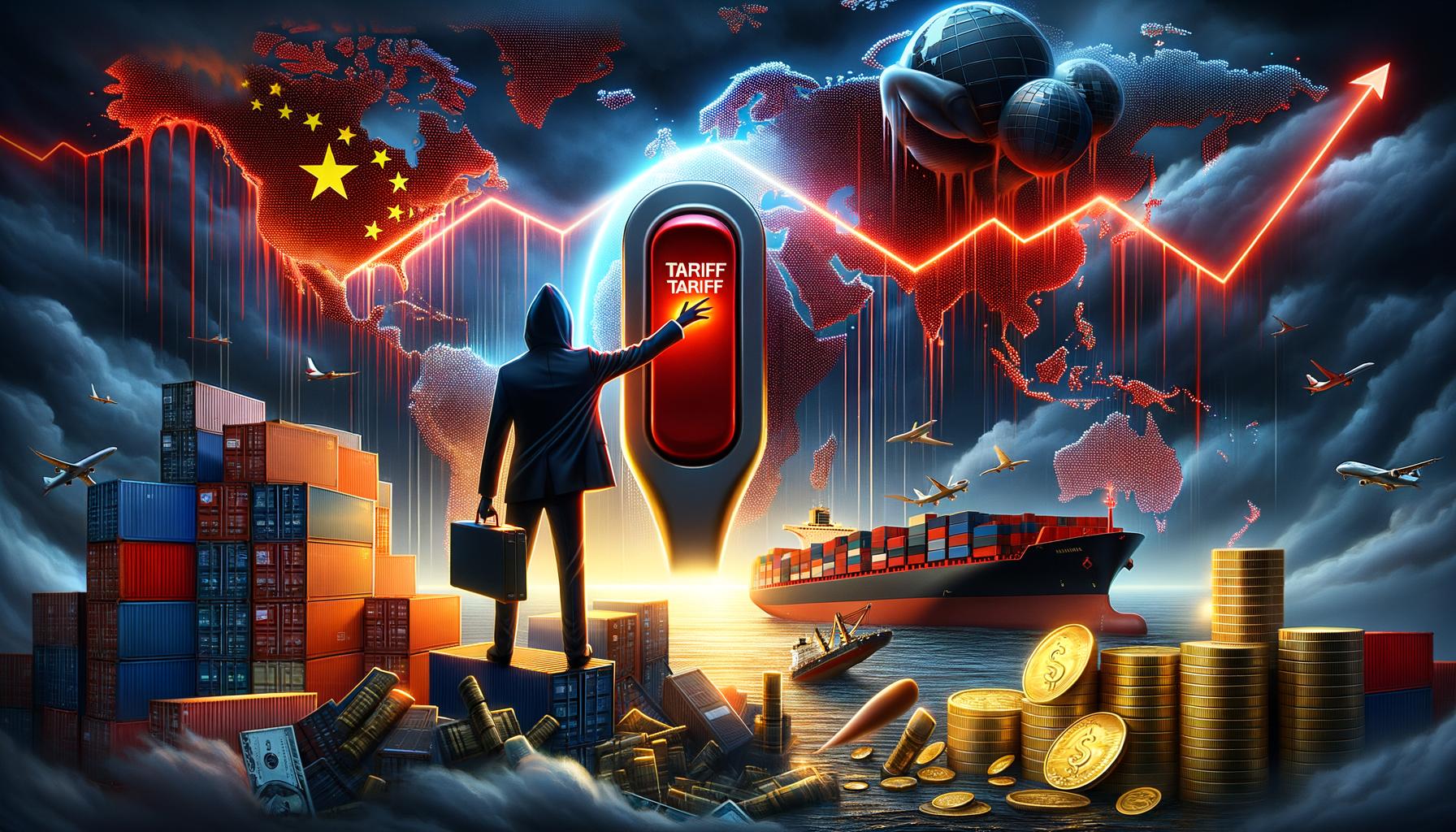
President Donald Trump’s announcement of a bold new tariff regime is already reshaping global financial markets and stroking deep investor concern. Centering to his 2024 re-election strategy, the tariff package targets imports from key Asian countries, potentially reigniting past trade tensions and disrupting international supply chains and financial institutions.
Tariffs and Market Impact
The proposed measures could mean an increase tariffs from 10% to 60% on imports from countries including China, South Korea, and Taiwan.
The focus is on high-impact sectors such as:
- Electronics
- Heavy machinery
- Consumer goods
Markets responded swiftly. Within hours of the announcement:
- The Dow dropped over 450 points before partially rebounding
- The S&P 500 fell 1.1%
- The Nasdaq lost 1.3%, dragged down by tech stocks
Sector-Specific Fallout
Semiconductor and electronics companies were hit hardest. Global giants like Apple and Nvidia saw losses due to their deep reliance on Chinese manufacturing. Asian markets echoed the panic:
- Hong Kong’s Hang Seng fell nearly 2%
- Tokyo’s Nikkei dropped 1.5%
Currency markets witnessed similar trends, with the Chinese yuan and regional currencies weakening against the U.S. dollar. Investors broadly shifted into safer assets, causing:
- 10-year U.S. bond yields to drop to 4.17%
- Gold to rise nearly 1%, closing at $1,925/oz
- Oil prices to dip on fears of slower global growth
Strategic Repercussions
Businesses are scrambling to adapt:
- Multinationals are revising supply chain strategies
- Procurement teams are considering reshoring or shifting production to Mexico or Eastern Europe
- Retailers like Walmart may pass cost increases to consumers
Some tech firms are exploring automation and domestic sourcing to hedge against foreign dependency. These shifts are already influencing earnings guidance and equity prices across sectors.
Political and Global Implications
This tariff package is set to begin in early 2026, but investors are watching the 2024 U.S. presidential election closely. If Trump wins, implementation is likely. If not, expect potential re-evaluation. Meanwhile, international reactions could exacerbate tension:
- China may retaliate with its own set of restrictions
- ASEAN and the EU might be impacted as secondary players or counter-strategic forces
Investment Strategies Moving Forward
Given the volatility, analysts suggest pivoting toward:
- U.S.-centric infrastructure and manufacturing ETFs
- Defense-oriented equities
- Conservative assets like treasuries and gold
Growth forecasts for 2026 have already been adjusted downward by major banks. Tighter global trade policies now join interest rate hikes in weighing on economic recovery expectations.
In such a fluid environment, agility and proactive capital management are paramount. Investors must stay alert to shifts in forward guidance, earnings outlooks, and strategic policymaking. As always, recalibrating portfolios in anticipation rather than reaction could yield the greatest rewards.
To read the original article, visit the New York Times.
Great News